Grammarly Weekly Stats
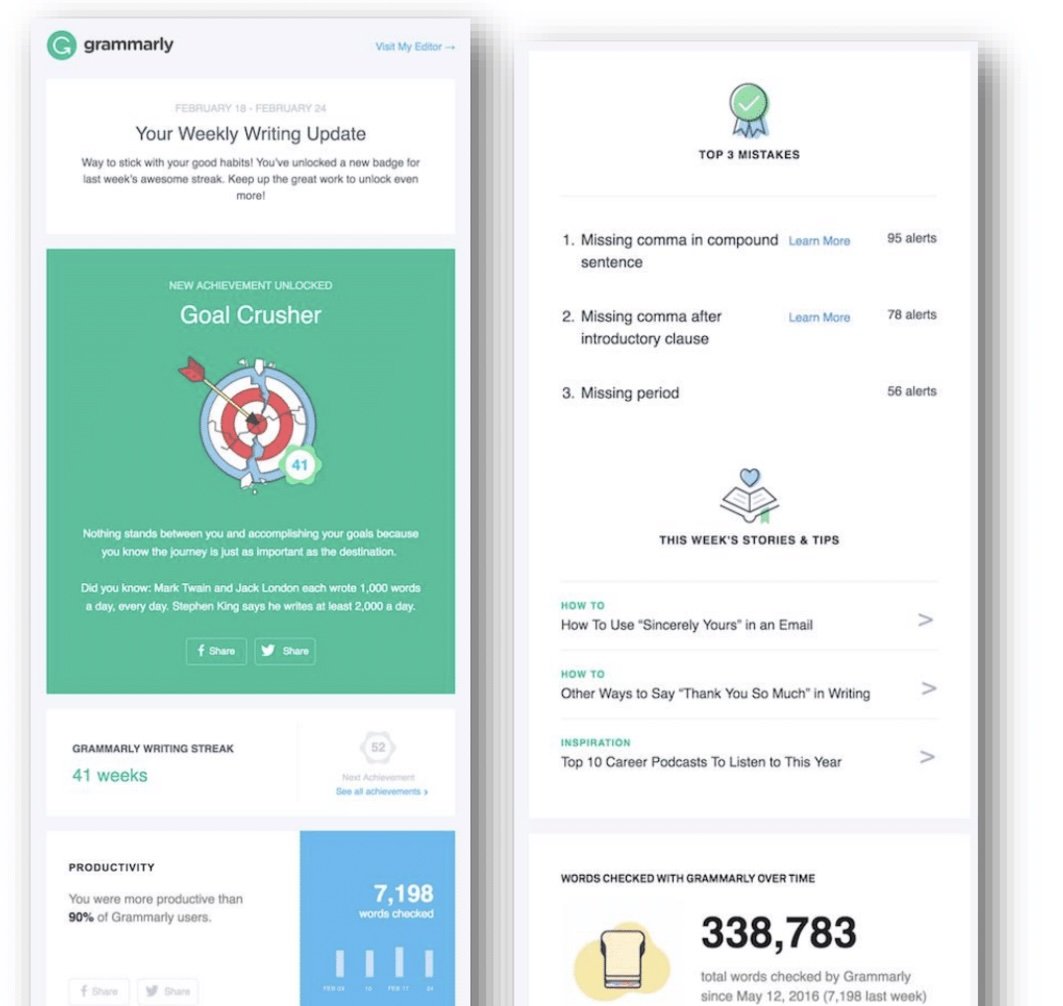
Millions of users count on Grammarly’s AI-powered products to communicate clearly and mistake-free. To keep users engaged, Grammarly sends a weekly statistics email, recapping each customer’s product usage over the course of that week. Over time, however, interest in the email declined and open rates dropped.
Grammarly recognized untapped potential in this send and collaborated with my team to increase immediate and sustained engagement. They wanted the experience to feel relevant and meaningful, encouraging users to engage more deeply with the tool. The lean company, however, couldn’t dedicate more internal resources to the project and needed the solution to be automated and nimble.
Level Up: Designing an Engagement Loop
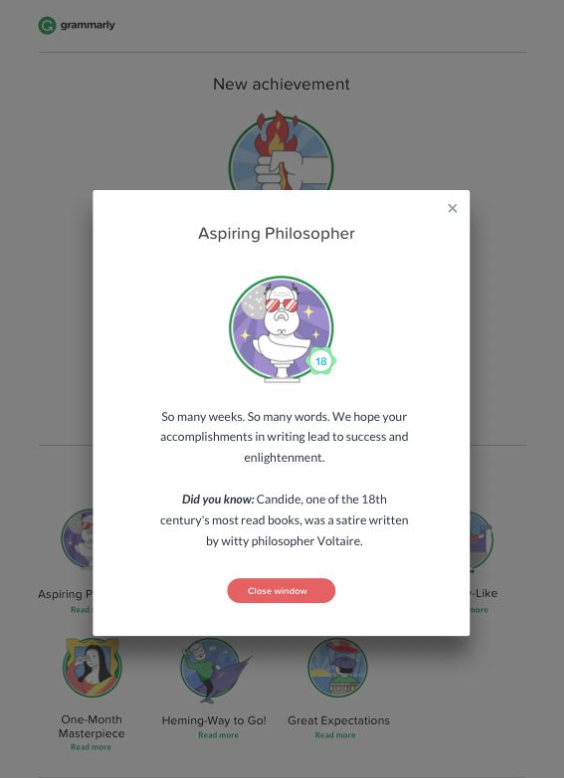
I designed a gamification-driven content experience to engage both free and premium users while remaining fun, on-brand, and educational. Subscribers earn milestone badges based on their engagement and achievements, which accrue in a virtual, personalized Trophy Case.
The content design challenge was making each badge feel like a genuine reward and never a guilt trip for inactivity. I wrote badge names and descriptions that celebrated specific accomplishments (hitting a new accuracy milestone, discovering a new tone) so that even small wins felt meaningful. For users who hadn't hit a new milestone that week, I crafted proximity messaging ("you're X away from your next badge") that reframed inactivity as progress rather than failure in a choice to prioritize encouragement over pressure, every time.
To incentivize longer-term engagement, I established a strategic weeks-of-engagement badge cadence and wrote social sharing copy designed to make accomplishments feel brag-worthy, giving users both the motivation and the language to share.
Powering Personalization: Building a Conditional Content System
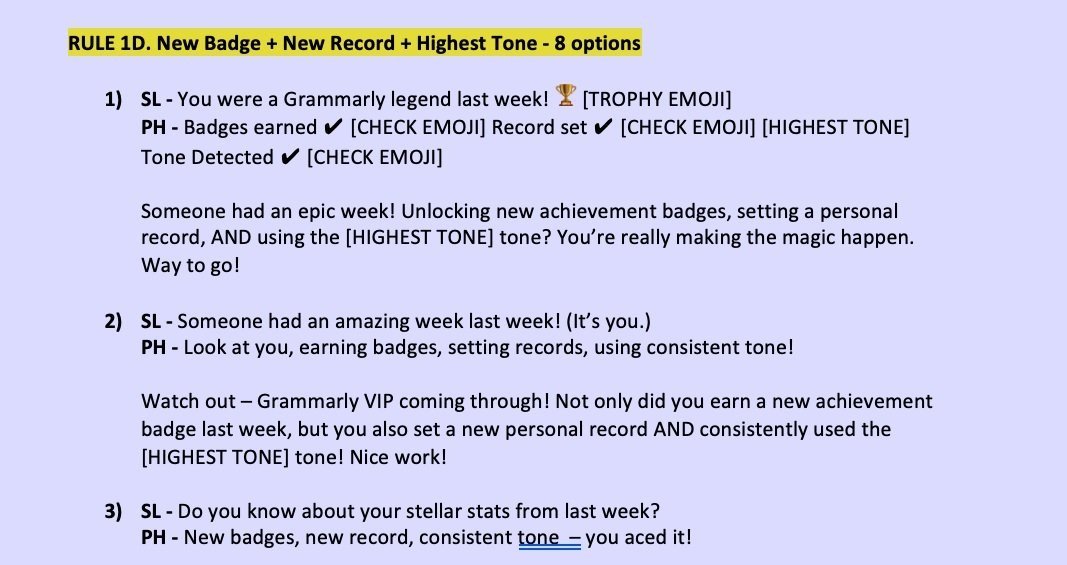
Using Grammarly's weekly statistics in Salesforce Marketing Cloud, I identified 15+ trigger conditions based on what the user achieved that week — new badge, new record, new tone, any combination, or no new records. For each, I defined a content hierarchy: a new badge always led; a personal record outranked a trend update; a "no milestones" week surfaced progress-toward-next-badge messaging instead. The most motivating information always came first.
Within these permutations, I wrote 8 variants of subject line, preheader, and narrative intro — 120+ unique content versions forming a conditional framework that kept the experience fresh, personal, and on-brand even fully automated.
Beyond the dynamic intro, I designed badge names and descriptions, Trophy Case UX copy, progress and proximity messaging, empty-state copy for "no new records" weeks, and trend narratives for Productivity, Accuracy, and Vocabulary data.
One-to-One Achievement Unlocked
The conditional content framework, built so users always encountered their most relevant achievement first, contributed to a 50% lift in open rates. Reframing "no milestones" weeks as progress moments helped drive a 2x re-engagement rate for lapsed users. And the share copy resulted in a 3x increase in social shares tied directly to the email.
What had been a declining send became one of Grammarly's most engaging touchpoints while remaining nimble through smarter content design. A 120-version content system, running on data rules and intentional copy hierarchy, transformed engagement patterns and enhanced Grammarly's reputation for bringing original, entertaining, and educational experiences to its users.